Particles during fan operation
Place a clean dark surface near the register and observe whether particles appear when the blower starts. Do not insert objects into the duct or block airflow.
Evidence reading 04
Review particles during fan operation, then connect the observation to its source, system location, and a written scope.
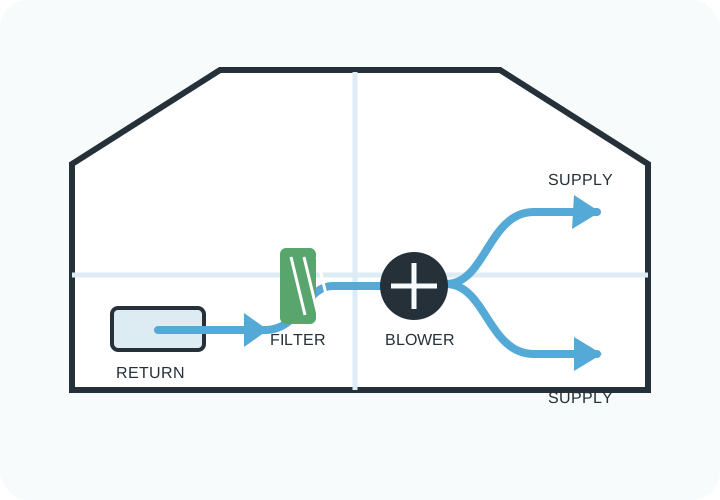
DIRECT ANSWER
An inspection is useful when it can confirm or reject a specific concern. EPA highlights substantial visible mold on hard system surfaces, vermin infestation, and ducts clogged with excessive debris or releasing particles through supply registers. A water event, uncontrolled renovation dust, or a repeated odor tied to fan operation can also justify looking for a cause, although none proves that cleaning is the answer.
Write down timing, location, and what changed. Evidence that appears only in one room points to a different path than a pattern across multiple supply registers. A good inspection should explain the pattern and identify which parts of the air path need attention.
READ THE AIR PATH
Place a clean dark surface near the register and observe whether particles appear when the blower starts. Do not insert objects into the duct or block airflow.
Water staining, a wet liner, a backed-up drain pan, or condensation needs a moisture-source evaluation. Cleaning before drying and repair can be temporary.
Droppings, nesting, odor, or damaged duct material call for pest exclusion and safe contamination handling. The entry path matters as much as the debris.
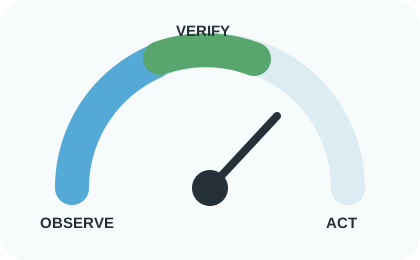
USE THIS SEQUENCE
Note the first date, room, system mode, weather or smoke conditions, and recent work.
Look at the filter, return grille, supply faces, and the area around the air handler without removing protected panels.
Require the inspector to connect observations to a proposed action.
Save photos, written findings, and estimates so competing proposals can be compared.
CALL PATH
Sunnyvale Airflow Guide is an independent lead-generation website, not an air duct cleaning company. Calls may connect you with an independent service provider. Service availability, qualifications, pricing, and terms must be confirmed directly with that provider.