Connection point
The chosen access should support the planned section without damaging equipment or leaving an opening that cannot be sealed properly.
Method reading 24
Review connection point, then connect the observation to its source, system location, and a written scope.
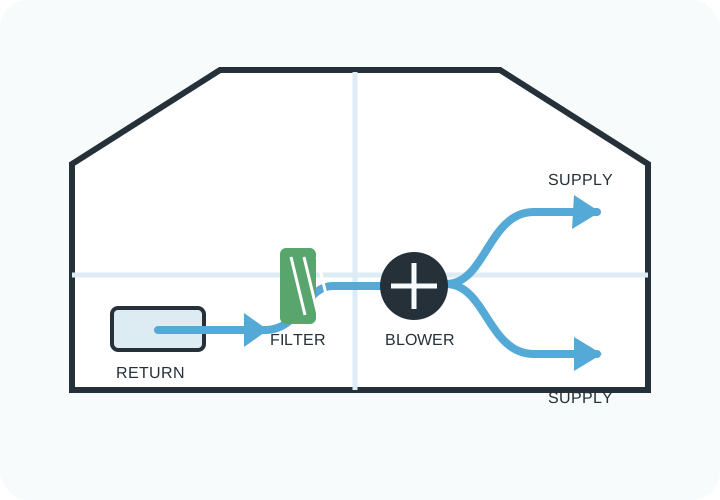
DIRECT ANSWER
A negative-pressure setup connects a collection machine to the duct system so loosened debris moves toward the collector instead of occupied rooms. The concept matters, but a large hose or loud machine does not prove that every branch was reached or that the right tools were used.
Ask where the collector will connect, how supply and return sections will be isolated, where exhaust will go, and how pressure will be maintained while individual registers are worked. Collection needs to be paired with material-aware agitation and a final visual inspection.
READ THE AIR PATH
The chosen access should support the planned section without damaging equipment or leaving an opening that cannot be sealed properly.
Registers and branches may be opened or sealed in sequence to direct airflow. Ask how occupied rooms and fragile finishes will be protected.
Outdoor exhaust or high-efficiency filtration for indoor exhaust helps prevent removed particles from returning to the building. Placement still matters.
USE THIS SEQUENCE
Match collector locations to return and supply zones.
Agree on register covers, floor protection, and equipment shutdown.
Negative pressure does not make a harsh brush safe for flex or fiberglass.
Use a visual walkthrough and documentation instead of machine size as the completion test.
CALL PATH
Sunnyvale Airflow Guide is an independent lead-generation website, not an air duct cleaning company. Calls may connect you with an independent service provider. Service availability, qualifications, pricing, and terms must be confirmed directly with that provider.