Outdoor placement
Discharge should be positioned away from people and building openings. Weather and shared-property rules can affect the safe location.
Containment reading 26
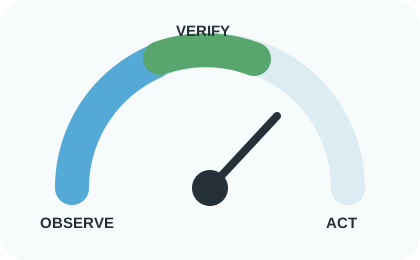
Review outdoor placement, then connect the observation to its source, system location, and a written scope.
DIRECT ANSWER
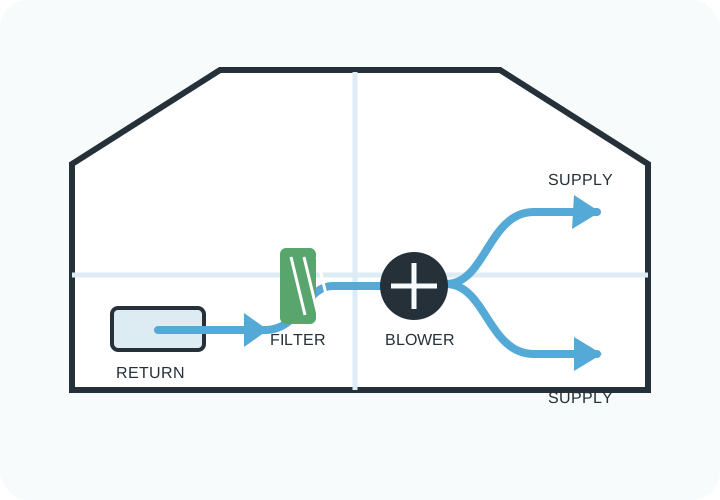
EPA advises using vacuum equipment that exhausts particles outside or high-efficiency particulate air filtration when exhaust remains indoors. Either setup requires planning. Outdoor discharge should not blow debris toward an entrance, neighbor, open window, vehicle, or air intake. Indoor equipment needs suitable filtration, seals, maintenance, and placement.
The question is not only where the hose ends. Ask how the collector is transported through the home, how full containers and filters are handled, and how leaks or a power interruption will be managed.
READ THE AIR PATH
Discharge should be positioned away from people and building openings. Weather and shared-property rules can affect the safe location.
If exhaust stays indoors, ask for the filtration specification and how the unit is inspected for leaks. A generic claim of HEPA equipment is not a full containment plan.
Removed debris should remain contained during filter changes, machine movement, and disposal. The path through occupied rooms belongs in the preparation plan.
USE THIS SEQUENCE
Review openings, neighbors, walkways, and outside-air intakes.
Ask what happens from duct connection through final exhaust.
Use floor and corner protection for hoses and collectors.
Ask how sections are closed if power, equipment, or weather stops the work.
CALL PATH
Sunnyvale Airflow Guide is an independent lead-generation website, not an air duct cleaning company. Calls may connect you with an independent service provider. Service availability, qualifications, pricing, and terms must be confirmed directly with that provider.