Problem definition
Dust adhesion, damaged liner, odor, and air leakage are separate concerns. One sprayed coating should not be presented as the answer to all four.
Treatment reading 29
Review problem definition, then connect the observation to its source, system location, and a written scope.
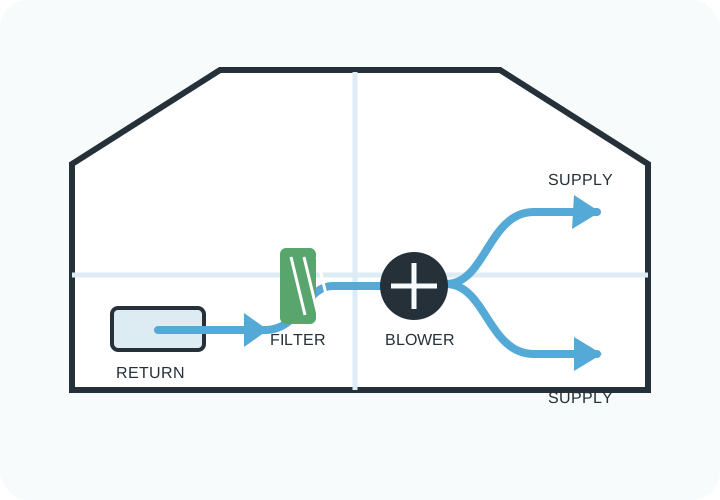
DIRECT ANSWER
An internal sealant or encapsulant is applied to a duct surface. Air-leak sealing closes gaps at joints, seams, boots, and connections so conditioned air stays in the intended path. EPA treats these as different practices. A coating proposed after cleaning should not be confused with repairing leakage.
EPA notes unresolved questions about internal sealants, including coverage, durability, toxicity, fire and acoustic characteristics, and effects on fiberglass materials. Ask what problem the product is solving, where it will be applied, and whether repair or replacement would address the underlying defect more directly.

READ THE AIR PATH
Dust adhesion, damaged liner, odor, and air leakage are separate concerns. One sprayed coating should not be presented as the answer to all four.
Request the product data, approved surfaces, preparation, cure conditions, emissions information, and effect on system warranties.
Duct joints and boots can require mechanical fastening, mastic, approved tape, insulation restoration, or replacement. Ask how leakage is measured and verified.
USE THIS SEQUENCE
Require evidence of coating need or leakage location.
Review physical cleaning, joint repair, liner replacement, and doing nothing.
Confirm material, application, cure, occupancy, and warranty conditions.
Use visual inspection and, for leak repair, an appropriate leakage or airflow check.
CALL PATH
Sunnyvale Airflow Guide is an independent lead-generation website, not an air duct cleaning company. Calls may connect you with an independent service provider. Service availability, qualifications, pricing, and terms must be confirmed directly with that provider.