Location and necessity
Each opening should have a clear purpose and safe clearance. More holes do not automatically mean a more thorough job.
Access reading 23
Review location and necessity, then connect the observation to its source, system location, and a written scope.
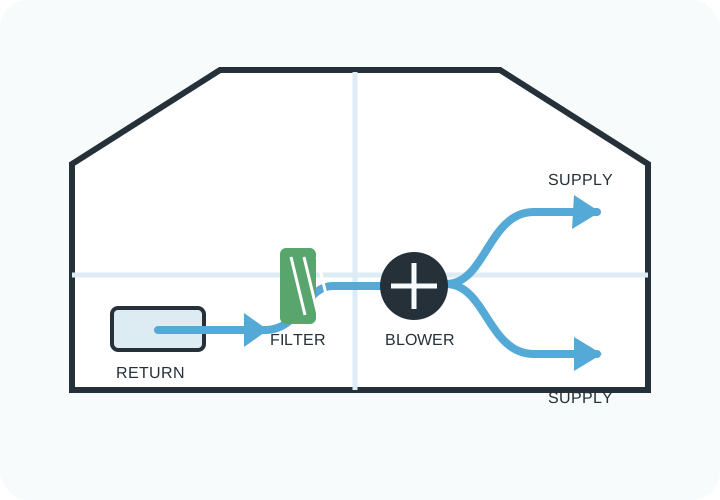
DIRECT ANSWER
Long or enclosed duct sections may require access doors or ports so tools and inspection cameras can reach the interior. EPA says access holes created or used during cleaning should be sealed and re-insulated so they are airtight. The closure is part of the job, not a cleanup detail.
Ask where new openings are planned and why existing registers or service panels are not enough. Permanent access should not damage structural members, fire-rated assemblies, wiring, plumbing, or duct features. Any system alteration must be handled by an appropriately qualified person.

READ THE AIR PATH
Each opening should have a clear purpose and safe clearance. More holes do not automatically mean a more thorough job.
A durable access door or cap generally needs appropriate fasteners and seal, not just a strip of ordinary tape.
Exterior insulation and vapor barriers should be restored. Ask how leakage at new closures will be checked under operation.
USE THIS SEQUENCE
Review them before cutting begins.
Locate utilities, framing, dampers, and rated assemblies.
Put fasteners, sealant, insulation, and labeling in the written scope.
Feel and listen for leakage only at safe accessible points after reassembly.
CALL PATH
Sunnyvale Airflow Guide is an independent lead-generation website, not an air duct cleaning company. Calls may connect you with an independent service provider. Service availability, qualifications, pricing, and terms must be confirmed directly with that provider.