Surface versus pathway
Dust on the outside face may come from the room. Dust emerging from behind the vanes during blower operation is a different observation.
Component reading 16
Review surface versus pathway, then connect the observation to its source, system location, and a written scope.
DIRECT ANSWER
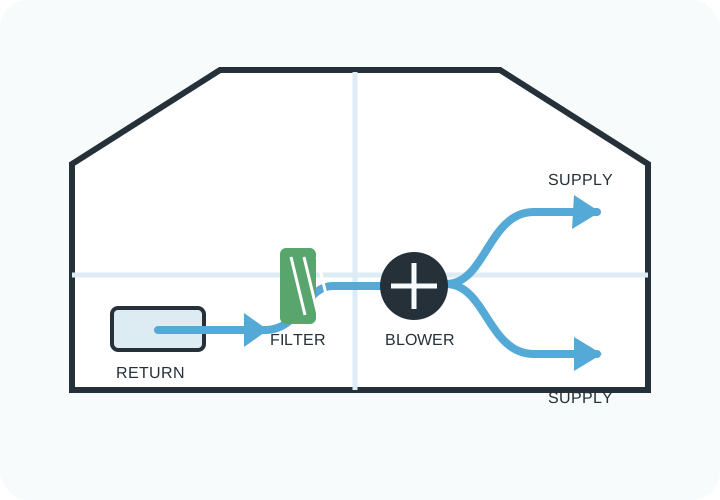
A register, grille, or diffuser is the room-facing part of the air path. Its surface can collect ordinary room dust even when deeper duct surfaces are not heavily contaminated. Removing and washing a cover is not the same as cleaning a branch, plenum, blower, or coil.
Use these openings as observation points. Loose fasteners, damaged seals, rust, moisture staining, and particles that appear during operation can justify a closer look. A proposal should say which covers will be removed, how they will be protected, and how they will be firmly reattached.

READ THE AIR PATH
Dust on the outside face may come from the room. Dust emerging from behind the vanes during blower operation is a different observation.
A loose register can rattle or pull dust from a wall or ceiling cavity. Ask whether the boot and surrounding seal are intact.
Painted, coated, or delicate covers can be scratched by harsh tools. Agree on handling and replacement responsibility before removal.
USE THIS SEQUENCE
Include the surrounding wall, floor, or ceiling.
Record movement, noise, or particles when the blower starts.
Identify the boot, branch material, and access limits.
Confirm covers are clean, secure, undamaged, and not blocking airflow.
CALL PATH
Sunnyvale Airflow Guide is an independent lead-generation website, not an air duct cleaning company. Calls may connect you with an independent service provider. Service availability, qualifications, pricing, and terms must be confirmed directly with that provider.