System inventory
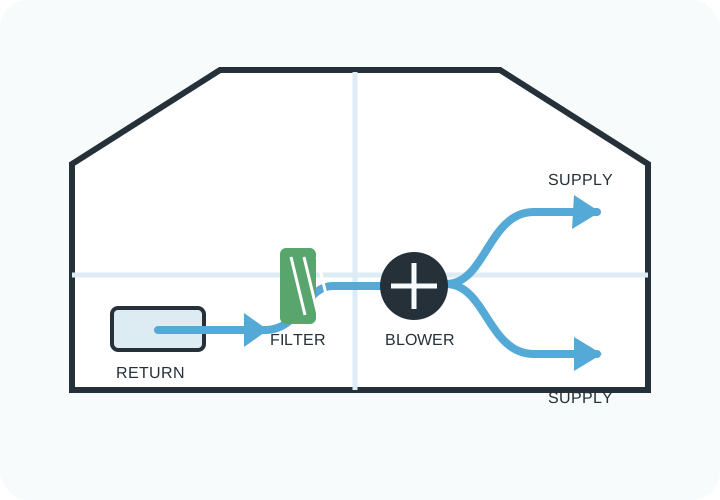
Record the number of air handlers, major returns, accessible supply branches, and duct materials. Ask the provider to confirm the inventory onsite.
Hiring reading 36
Review system inventory, then connect the observation to its source, system location, and a written scope.
DIRECT ANSWER
A useful estimate names the system, evidence, components, access method, cleaning method, protection, exclusions, products, price, and result check. A price without scope cannot be compared. EPA recommends talking with multiple providers and getting written estimates before deciding.
Do not use an advertised coupon as the working total. Count systems, returns, supplies, and unusual access only to understand the proposal, not to invent your own price. Require written approval before add-ons.
READ THE AIR PATH
Record the number of air handlers, major returns, accessible supply branches, and duct materials. Ask the provider to confirm the inventory onsite.
The estimate should say whether registers, plenums, blower, coils, drain pan, air handler, and ducts are included, excluded, or referred to another trade.
Add-ons should include evidence, price, and your approval before work. A provider should not hold the system open while pressuring a decision.
USE THIS SEQUENCE
Give every bidder the same starting facts.
Separate inspection, cleaning, products, access, repairs, replacement, and tax or disposal.
Do not choose on price alone.
Keep a copy and define how changes will be authorized.
CALL PATH
Sunnyvale Airflow Guide is an independent lead-generation website, not an air duct cleaning company. Calls may connect you with an independent service provider. Service availability, qualifications, pricing, and terms must be confirmed directly with that provider.