Timing
Note whether particles appear at startup, continuously, only after a long idle period, or during a particular heating or cooling mode.
Particle reading 10
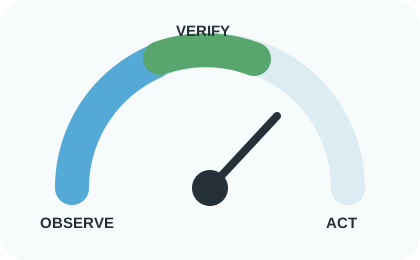
Review timing, then connect the observation to its source, system location, and a written scope.
DIRECT ANSWER
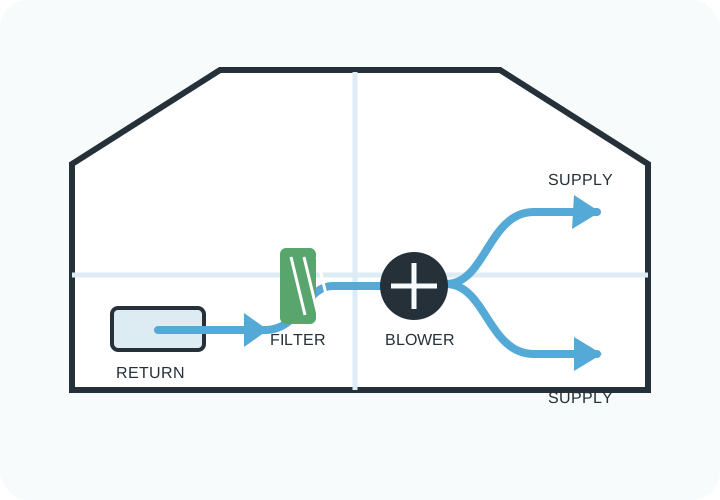
Particles that appear when the blower starts deserve a closer look, especially when the pattern repeats. EPA includes ducts releasing excessive debris through supply registers among the conditions that may justify cleaning. The observation still needs context. Material can come from a deteriorated register seal, nearby ceiling, damaged internal liner, recent construction, or an upstream component.
Do not scatter powder to test the airflow. Photograph naturally occurring deposits, note which system mode was running, and compare more than one register. That record helps an inspector trace the path without starting from a sales conclusion.
READ THE AIR PATH
Note whether particles appear at startup, continuously, only after a long idle period, or during a particular heating or cooling mode.
One register may point to a local boot or branch issue. Multiple supplies after the equipment may point farther upstream.
Do not handle suspect pest or microbial material. Color and texture can help documentation, but they do not prove composition.
USE THIS SEQUENCE
Create a baseline without opening the register or duct.
Record the mode, fan timing, and affected registers.
A bypass gap can move debris toward the blower and supply side.
Have the inspector connect the visible register event to upstream evidence.
CALL PATH
Sunnyvale Airflow Guide is an independent lead-generation website, not an air duct cleaning company. Calls may connect you with an independent service provider. Service availability, qualifications, pricing, and terms must be confirmed directly with that provider.