Particles
Mechanical filters and HEPA portable cleaners can collect airborne particles when sized, placed, and maintained correctly. Duct cleaning does not continuously filter room air.
Decision reading 35
Review particles, then connect the observation to its source, system location, and a written scope.
DIRECT ANSWER
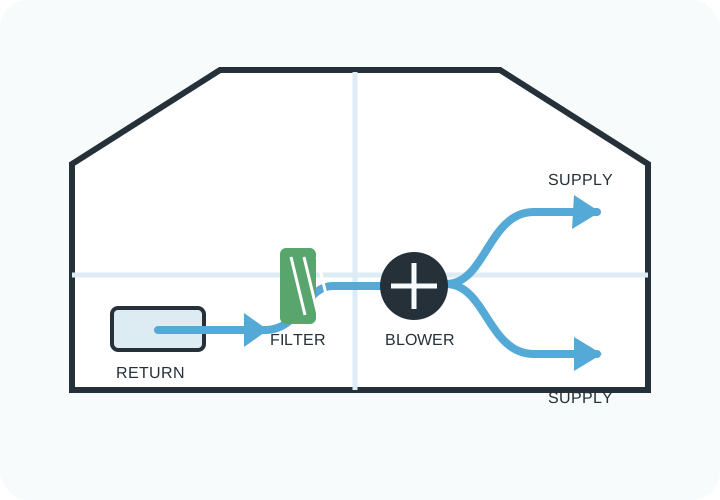
Source control removes or reduces what creates pollution. Ventilation exchanges indoor and outdoor air when conditions permit. Central filters treat air moving through the HVAC system. Portable air cleaners treat air in a room. Duct cleaning removes selected deposits from system surfaces when evidence supports it. None is a universal replacement for the others.
CARB recommends mechanical filtration and warns against ozone generators. EPA says duct cleaning is generally an as-needed decision. Start by naming the pollutant, source, room or system pathway, and desired outcome.
READ THE AIR PATH
Mechanical filters and HEPA portable cleaners can collect airborne particles when sized, placed, and maintained correctly. Duct cleaning does not continuously filter room air.
Particle filters do not remove every gas. Activated carbon can help with some gases, while source removal and safe ventilation may matter more.
A verified deposit inside a component may support cleaning, repair, or replacement. The service should be matched to material and cause.
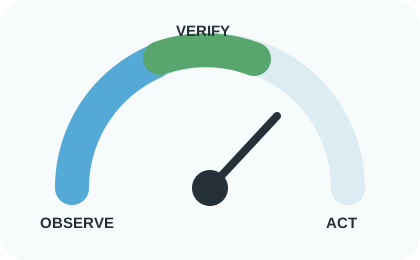
USE THIS SEQUENCE
Particle, gas, odor source, moisture, pest debris, or equipment condition.
Stop smoke, water, pest entry, or renovation dust where possible.
Use room filtration, central filtration, ventilation, HVAC service, or duct evaluation as evidence supports.
Look for the defined condition rather than a general promise of pure air.
CALL PATH
Sunnyvale Airflow Guide is an independent lead-generation website, not an air duct cleaning company. Calls may connect you with an independent service provider. Service availability, qualifications, pricing, and terms must be confirmed directly with that provider.