Marketing language
A provider may avoid the word ozone. Ask whether the device produces ozone, ions, plasma, hydroxyl radicals, or another reactive output.
Safety reading 30
Review marketing language, then connect the observation to its source, system location, and a written scope.
DIRECT ANSWER
Ozone is a reactive gas and a lung irritant, not a fresh-air ingredient. California Air Resources Board advises against ozone generators for occupied spaces and explains that ozone does not remove particles. Terms such as activated oxygen, energized oxygen, or mountain-fresh air can still describe an ozone-producing process.
Do not approve an ozone treatment merely because it follows vacuuming. Ask for the exact device, its California status, measured emissions, occupancy plan, and the evidence linking it to the identified problem. Source removal, moisture correction, filtration, ventilation, or material replacement may be more direct.
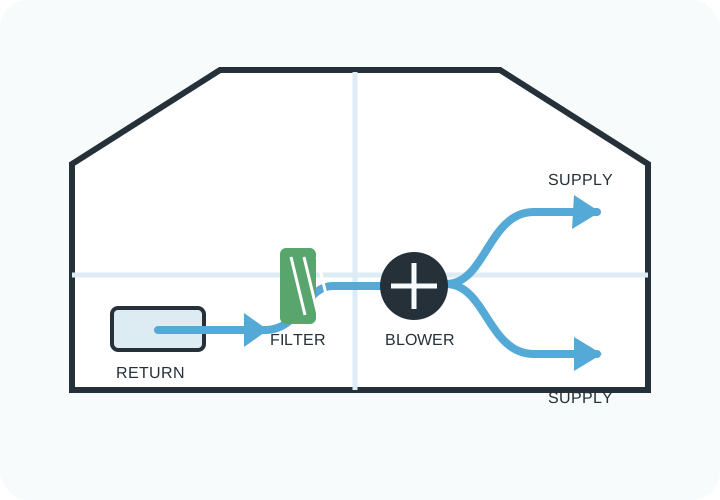
READ THE AIR PATH
A provider may avoid the word ozone. Ask whether the device produces ozone, ions, plasma, hydroxyl radicals, or another reactive output.
Ozone does not collect dust, ash, pollen, or fibers. A smell change is not proof that contamination was removed.
CARB certifies indoor air cleaning devices for ozone-emission and electrical-safety limits. Certification does not prove effectiveness for a particular duct concern.
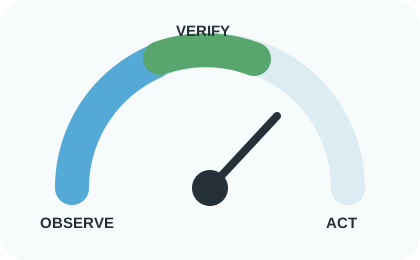
USE THIS SEQUENCE
Does any device or chemical intentionally or incidentally produce ozone?
Define whether the concern is particles, moisture, odor source, or material contamination.
Verify current California requirements and the exact device category.
Prefer removal, repair, filtration, or ventilation matched to evidence.
CALL PATH
Sunnyvale Airflow Guide is an independent lead-generation website, not an air duct cleaning company. Calls may connect you with an independent service provider. Service availability, qualifications, pricing, and terms must be confirmed directly with that provider.