Deposit pattern
Dry dust, greasy buildup, and debris entering through filter bypass suggest different causes. The filter rack and return side should be inspected with the blower.
Component reading 18
Review deposit pattern, then connect the observation to its source, system location, and a written scope.
DIRECT ANSWER
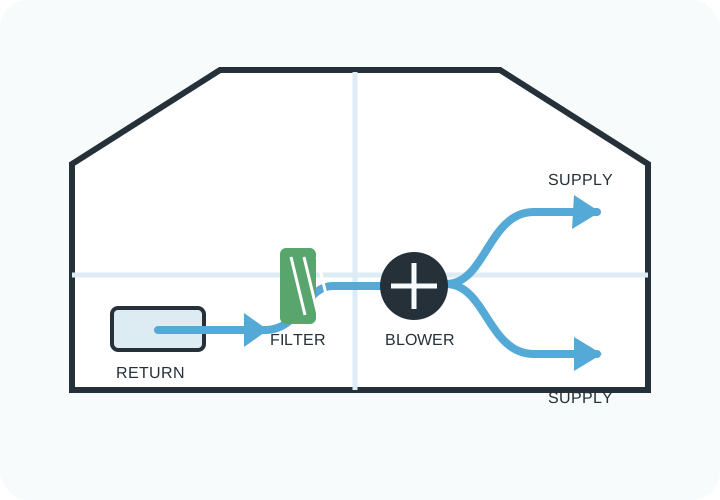
The blower moves air through the equipment and duct network. Debris on blades or in the compartment can affect the air path, but cleaning a blower is equipment work, not proof that every duct branch needs cleaning. Oil residue, noise, vibration, or weak operation can also point to maintenance or repair.
EPA's post-cleaning checklist asks whether blower blades and the compartment are visibly clean. It does not replace manufacturer instructions or electrical safety. Ask who will remove, protect, balance, and test the assembly if the scope goes beyond accessible surface cleaning.

READ THE AIR PATH
Dry dust, greasy buildup, and debris entering through filter bypass suggest different causes. The filter rack and return side should be inspected with the blower.
Noise, bearing problems, motor faults, or wheel imbalance require HVAC diagnosis. A cleaning crew should not improvise a repair.
A removed wheel or panel must be restored correctly. Ask how fasteners, wiring, rotation, and operation will be verified.
USE THIS SEQUENCE
Separate visible debris from noise, weak airflow, or equipment failure.
Look for the source feeding material toward the blower.
Cleaning and repair may need different qualifications.
Listen and observe normal fan startup after work.
CALL PATH
Sunnyvale Airflow Guide is an independent lead-generation website, not an air duct cleaning company. Calls may connect you with an independent service provider. Service availability, qualifications, pricing, and terms must be confirmed directly with that provider.