Something is visible
Start with context photos and material identification. Ordinary adhered dust is different from heavy deposits, a damaged liner, pest debris, or particles moving into a room.
Review inspection signsAirflow lab 00
A practical Sunnyvale guide to deciding whether air duct cleaning is justified, what a complete scope can include, and what to verify before hiring.
THE SHORT ANSWER
EPA does not recommend routine air duct cleaning. The agency says the benefits remain uncertain for most homes and has not found that duct cleaning prevents health problems. Its consumer guidance points to a narrower set of situations that can support further evaluation: substantial visible mold growth on hard system surfaces, a vermin infestation, or excessive dust and debris that is actually released from supply registers.
That standard changes the first question. Instead of asking how often every home should book cleaning, ask what you can see, when the concern occurs, which part of the air path is involved, and what source could recreate it. A careful provider should be able to show the condition, identify the duct material, explain the proposed method, and put the complete scope in writing.

AIR CLUES
Start with context photos and material identification. Ordinary adhered dust is different from heavy deposits, a damaged liner, pest debris, or particles moving into a room.
Review inspection signsFind the water, drainage, condensation, or room source first. A musty smell can justify investigation, but it does not identify mold.
Trace moisture firstDuring wildfire smoke, follow BAAQMD and AirNow exposure guidance. Compatible filtration and source control come before assumptions about duct interiors.
Use the smoke guideAsk for evidence, a component list, material-specific methods, exhaust details, product labels, change rules, and post-job documentation.
Build a comparable estimateDUCT MAP
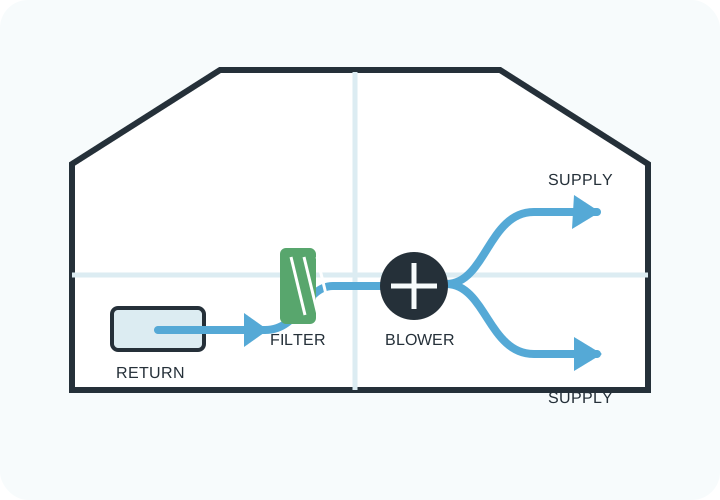
Return grilles draw room air toward the filter and air handler. The blower moves it across heating or cooling components. Supply plenums and branches deliver conditioned air back to rooms. Dust or moisture at one point can mean something different from the same-looking material somewhere else.
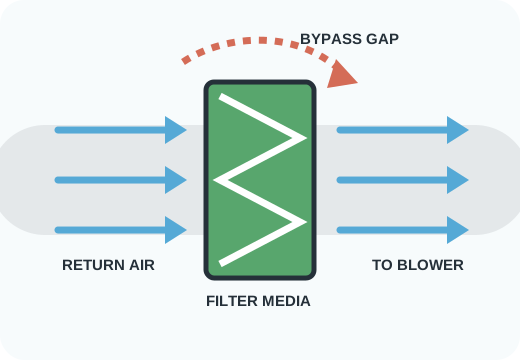
A complete inspection accounts for the return side, filter fit, blower compartment, coil and drain area, plenums, supply branches, registers, and duct materials. It does not mean every part automatically needs cleaning. It means each inclusion or exclusion should make sense in the connected path.
EPA BOUNDARY
Cleaning can remove selected deposits from accessible system surfaces when the method fits the material and the debris is collected safely. It can provide a visible result when the same components are inspected before and after. It cannot prove that a home is healthy, cure symptoms, guarantee lower bills, or correct every airflow complaint.
Weak airflow may reflect a dirty filter, blocked coil, blower problem, closed damper, crushed flex duct, open joint, insulation issue, or system design. A recurring odor may begin at a wet drain pan, room material, crawl space, outdoor intake, or nearby source. Ask which evidence points specifically to duct-surface cleaning and which findings need HVAC, moisture, pest, or building work.
See when cleaning may not helpMATERIAL CHECK
Bare sheet metal can tolerate controlled mechanical cleaning, but dampers, seams, coatings, and access closures still need protection. Flexible duct has a thin inner liner that can tear or collapse. Fiberglass duct board and internal liner are porous and should not be attacked with stiff brushes or added moisture.
EPA says wet or visibly moldy fiberglass duct material may need replacement. That is a different project from brushing a dry metal branch. Ask the provider to identify each material, show damage or contamination in context, and compare cleaning with repair or replacement where appropriate.
Review porous-material limitsSUNNYVALE CONTEXT
Bay Area wildfire smoke can load filters and affect indoor air. Regional guidance emphasizes current air-quality information, reduced exposure, and compatible mechanical filtration. It does not tell every household to clean ducts after a smoke day. Wait for safe conditions, inspect filters and room sources, then document any persistent system evidence.
Sunnyvale's smokefree law addresses smoke near operable openings and vents and inside multi-unit housing. Renters and condo residents may need to involve a landlord or association when a source crosses shared areas. The law provides context for tracing smoke, not evidence that a duct cleaning is required.
The City publishes separate guidance for furnace, air-conditioning, and remodeling projects. If a cleaning estimate expands into replacement, installation, or system alteration, ask who will verify California license and Sunnyvale permit requirements.
WHAT A CAREFUL PROPOSAL SHOWS
HIRING SEQUENCE
Give competing providers the same description and ask the same questions. EPA recommends written estimates. A low coupon is not comparable to a whole-system proposal unless both define systems, returns, supplies, equipment components, access, protection, products, exclusions, and change rules.
Pause if the conversation turns into a health scare, a claim that EPA certifies a company, or an immediate sanitizer, sealant, ozone, equipment, or replacement add-on. Ask for photographs in context, the exact product or defect, the written price, and time to verify the recommendation. California's CSLB lookup can help check the exact contractor when the scope requires a license.
COMMON QUESTIONS
No. EPA recommends considering duct cleaning on an as-needed basis because evidence of routine health or particle-reduction benefits remains uncertain. Its examples include substantial visible mold on hard system surfaces, vermin infestation, and excessive debris actually released from registers.
EPA says duct cleaning has not been shown to prevent health problems. A health concern deserves advice from a qualified medical professional, while an air-path concern should be evaluated on visible system evidence.
Yes. EPA notes that a light amount of household dust commonly adheres to duct surfaces and does not necessarily enter living spaces. Look for excessive deposits, a known contamination event, or particles actually released from registers.
No. Odor is a clue that can justify tracing moisture, but it does not identify mold or locate the source. Ask for visual evidence, material identification, and moisture-source correction.
Not automatically. The inspection should account for the whole connected system and explain each inclusion or exclusion. If a component is contaminated and ignored, it can contribute to recontamination.
CALL GAUGE
Sunnyvale Airflow Guide is an independent lead-generation website, not an air duct cleaning company. Calls may connect you with an independent service provider. Service availability, qualifications, pricing, and terms must be confirmed directly with that provider.
Phone routing has not been independently tested by this website. Ask who answered and confirm every provider fact before booking.